



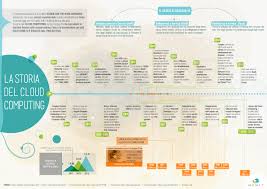
Since the advent of the Internet and with the exponential development of access to the network, the increasing dependence of users on network connectivity, the birth of increasingly popular online applications, the gigantic increase in the amount of information deposited on the network, the growing power of web-oriented programming languages, the birth and exponential development […]

The addition of a new host server installed with the free XenServer Enterprise 5.5 hypervisor, even if it can be trivial using the XenCenter graphical interface It can easily generate errors even if the host machines are practically the same, of the same brand and model, this is because to allow a painless XenMotion migration, […]

Yesterday Microsoft published the price-model for its Windows Azure Cloud. What’s interesting about the model is that it appears to be very similar to the Amazon Web Services model. Amazon is asking for $12.5 cents for each hour of a Windows Server base, in contrast to Microsoft has stated that the price will be 12 […]
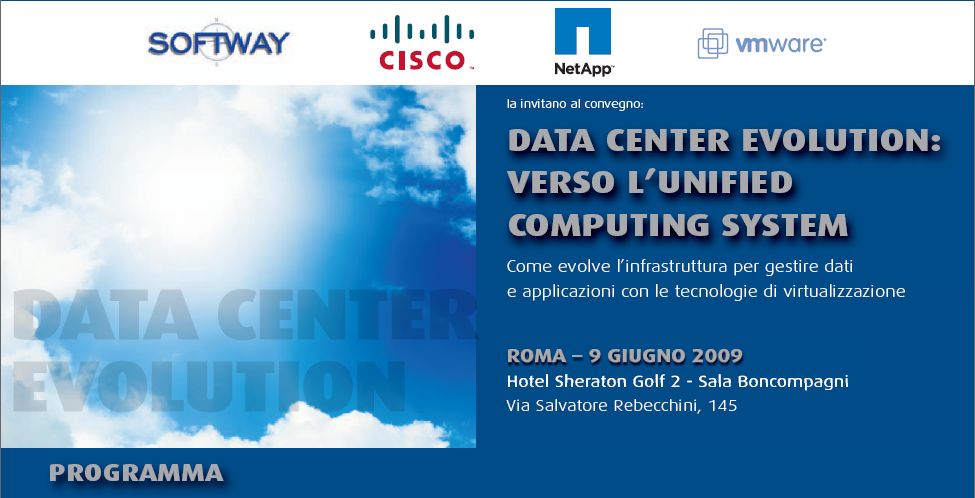
We attended this dutiful event in the beautiful Sheraton Golf2 Hotel in Rome. Below is the agenda: 9.30 Registration of participants 10.00 Welcome and opening of the meeting Luigi Marcocchia, Softway 10.10 How to harness the power of virtualization to transform Data Centers into simplified cloud computing infrastructures, capable of providing advanced, reliable, flexible and […]
Microsoft’s Cloud Computing platform, which is of the Application/Platform (Saas/PaaS) type, has an interesting service, SQL Data Service (SDS), represents a cloud-based relational database developed with SQL Server 2008 technology of which I recommend to see the presentation in silverlight. Through SDS it is possible to easily use an RDBMS relational database (such as SQL […]

NASA is launching its cloud computing platform called NEBULA in beta, a platform that integrates a set of open-source components into a single self-service platform. From the architecture diagram you can see database elements such as MySQL Cluster, storage network clustering solution such as the Lustre File System, elements of the Eucalyptus cloud system, Trac, […]

Despite the draft definition of NIST, National Institute of Standards and Technology, we continue to talk about Cloud Computing as if it were the technology capable of doing everything. One of these much-mentioned features is the alleged innate scalability of the technology, so let’s start with a proper understanding of scalability first: We can define […]
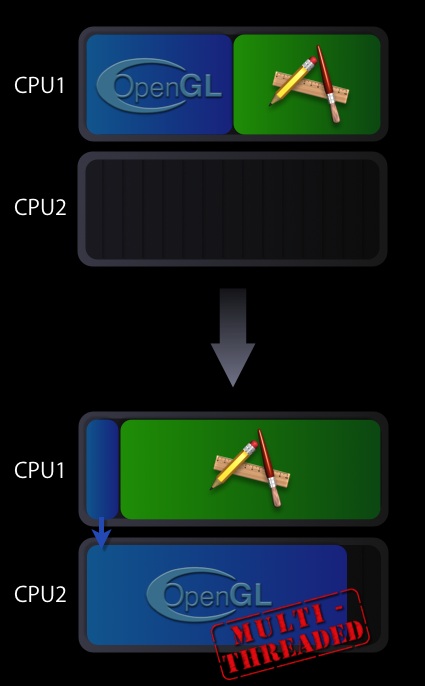
Some time ago in the in-depth analysis of hypervisor performance we found ourselves faced with a native problem of virtual Simmetric MultiProcessing (vSMP) which would be a methodology of Simmetric MultiProcessing (SMP), thanks to which we can assign more than one virtual CPU (vCPU) to a virtual machine. This feature would allow you to give […]

NIST (National Institute of Standards and Technology) informs us of the draft definition of the term Cloud Computing. There was a strong need for it given the proliferation of incorrect definitions and the often improper use of this term by outdated, but fashionable ICT companies. Here are some essential points that have not been translated: […]

The DMTF (Distributed Management Task Force) announced yesterday, April 27, the formation of a working group dedicated to the development of a set of specifications for the management of resources in the Cloud. The group, Open Cloud Standards Incubator, will focus mainly on interoperability between private and public clouds, perhaps developing management protocols, package formats […]